The therapy — the presence, the holding, the meaning-making — is where change becomes integration, a bridge between knowing and surrender, between the story we’ve carried and the consciousness that can finally release it.
In these expanded states, what is buried often rises — grief, memory, possibility — not to unravel us, but to remind us of what is still alive within. When we meet what has been hidden with curiosity instead of fear, movement becomes possible again.
softening, surrendering, flowing
Ketamine-assisted psychotherapy helps when talking is no longer enough — when the mind’s defenses need softening so what’s been held can begin to heal.
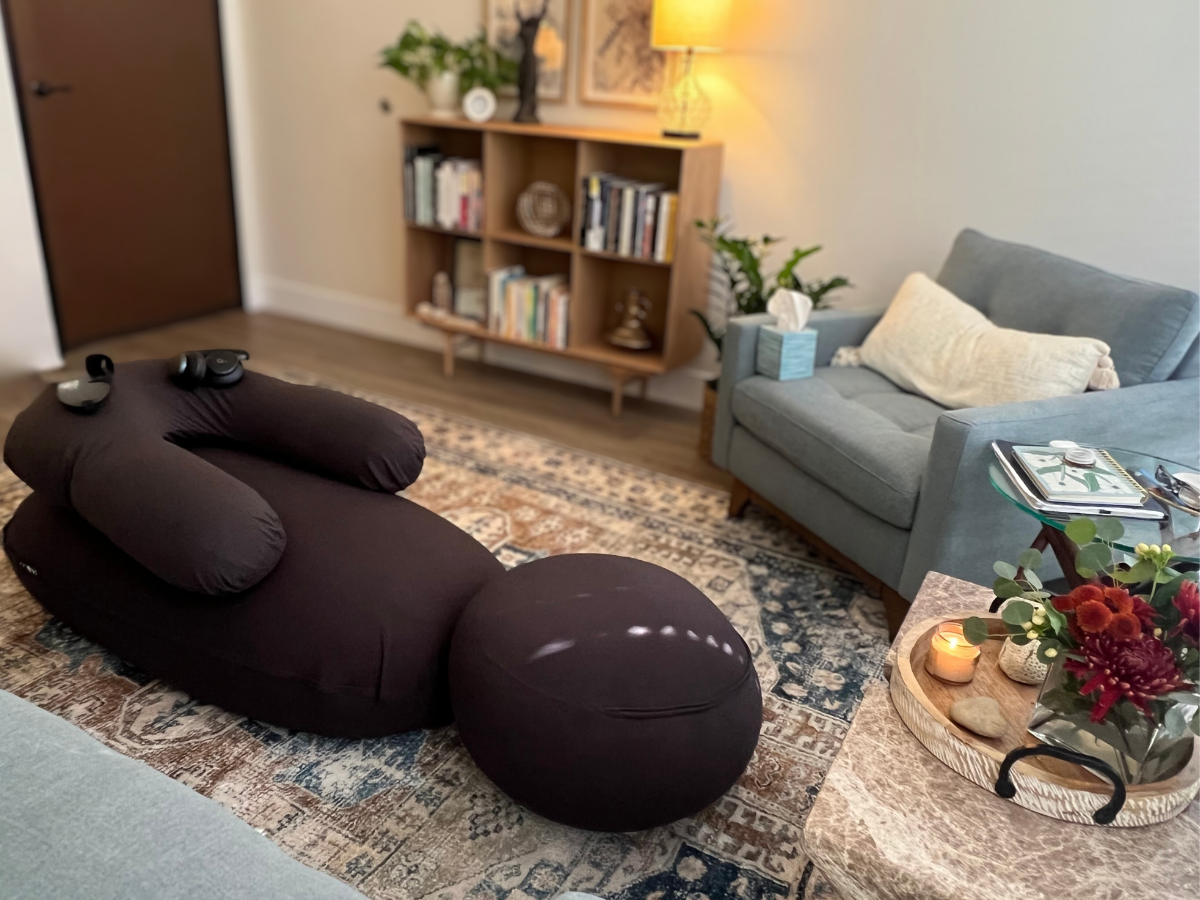
KAP pairs a carefully managed, low dose of ketamine with deep therapeutic support. It is used in clinical settings to support people experiencing depression, anxiety, trauma, or patterns that have not shifted through traditional therapy. In my practice, the ketamine sessions themselves take place in my office — a contained, therapeutic environment where I guide the experiential work.
I partner with Journey Clinical, a medical team that provides the medication and medical oversight for the ketamine component of treatment, ensuring this part of the process is held safely and with care. The ketamine component softens the mind’s rigid loops, allowing what has been defended to surface with gentleness.